


Related Posts



Podcasts




You’ve been here before.
The room’s quiet, the spreadsheet’s open, and all eyes are on the marketing line item.
“Can we trim this?” someone asks.
This is the kind of question that makes your stomach sink, because it’s not really about the number.
Instead, it’s about belief.
Marketing leaders spend countless hours proving what can’t always be seen: how brand, content, and campaigns drive revenue down the line. But when budgets tighten, marketing still feels like the easiest cut.
That’s often because leadership doesn’t see the connection clearly enough. And that’s on the communication, not the contribution.
The truth is that you probably don’t need more jargon-filled dashboards. You need a better story, one that translates marketing metrics into business outcomes that your leadership cares about.
In this guide, you’ll learn how to reframe marketing as an investment (not a cost), what metrics actually matter to leadership, and how to handle ROI objections with confidence.
By the end, you’ll know exactly how to prove your marketing is pulling real financial weight and finally earn the trust (and budgets) to grow.
4 Reasons Leadership Might Not See the Value of Marketing (Yet)
Before you can justify marketing costs, you need to understand why leadership doubts them in the first place.
Usually, it’s not because they dislike marketing. Instead, it’s because they can’t connect the dots between your work and their priorities.
For most executives, success is measured in simple terms: revenue, margin, and efficiency.
When marketing reports stop at impressions or engagement rates, it leaves a gap too wide for trust to cross. To a CEO, “brand awareness” could sound vague, but “AU$180k in pipeline influenced by content” may sound tangible.
Here are a few common reasons your leadership might not see the full impact of your marketing efforts right now:
1. The Data Disconnect
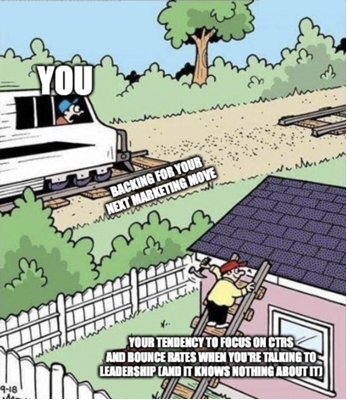
Many marketing teams collect oceans of data, but only a handful of metrics matter upstairs.
Unfortunately, this means that leadership doesn’t have time to interpret CTRs, bounce rates, or video watch times. They want a clear through-line: we spent X, we earned Y.
If your reporting doesn’t make that leap, scepticism could grow.
2. The Misalignment Of Language
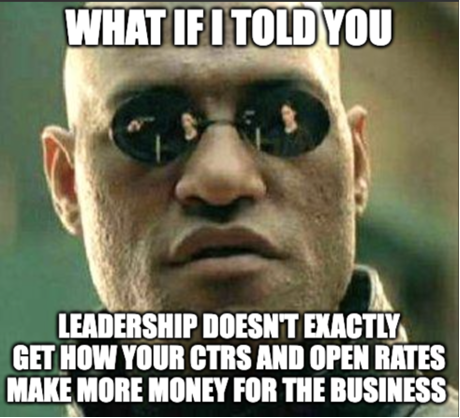
Marketing talks in leads and conversions. Sales talks in deals and quotas.
But the board? It talks in growth and profitability.
Each team’s vocabulary creates friction, especially when marketing’s numbers sound like a different currency. However, bridging that language gap is one of the fastest ways to rebuild credibility.
3. The Historical Baggage
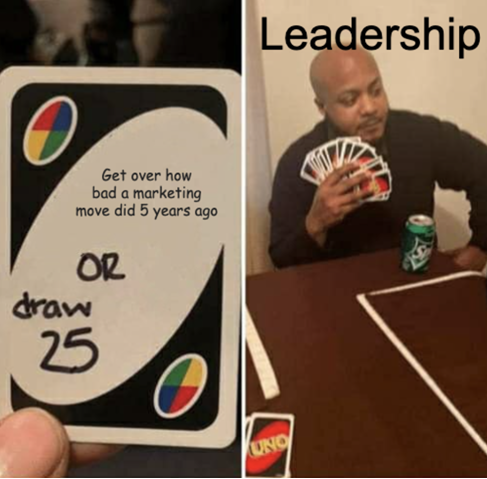
Almost every CEO has been burned by a campaign that overpromised and underdelivered.
Maybe an agency promised a flood of leads. Maybe a previous CMO pitched a rebrand that never paid off. Or, maybe they just heard of a marketing horror story from another CEO during their last mixer.
Those memories linger, and they can shape the questions your leadership asks today (and how it sees your strategies before you get to explain them).
4. The Visibility Problem
Impactful marketing often works behind the scenes: nurturing leads, building brand trust, or improving customer retention. These are powerful but invisible forces.
Unless you track and communicate them properly, they’ll probably never make it into the board’s perception of ROI.
Your leadership’s scepticism of your marketing efforts and their accompanying costs isn’t a personal jab, but more of a perspective that comes from what they see as practical. At the end of the day, they see gaps, not greed.
Once you understand that perspective, you can tailor your data, your language, and your story to bridge the divide.
Reframing Marketing as an Investment, Not a Cost
When it comes to getting the backing of leadership for the next stage of your marketing strategy, here’s something you should know: you can’t justify marketing spend with marketing logic.
The moment you defend your budget in terms of “awareness” or “engagement,” you’ve already lost the room.
Leadership thinks in returns instead of reach… and this means that it’s your job to translate. And here are a few tips you can use to better reframe marketing as an investment instead of a cost centre:
1. Shift From Spend To Yield
Start speaking in the same language the CFO uses.
Don’t say “We spent AU$50,000 on paid media.” Instead, say something like: “That AU$50,000 generated AU$320,000 in influenced pipeline and AU$96,000 in closed revenue.”
The second sentence turns an expense into an investment with a measurable yield.
If you can’t show that yet, talk in predictive terms: “Here’s what we expect based on last quarter’s data,” backed by conversion rates, cost per acquisition, and average deal value.
Projections are valid when they’re grounded in numbers.
2. Connect Marketing To Sales Velocity
Leadership loves efficiency. Show how marketing speeds up the sales cycle with results and insights like:
- How leads nurtured with helpful content close faster.
- How HubSpot automation reduces manual follow-ups and improves sales and marketing efficiency.
- How paid campaigns targeting decision-stage buyers shorten the path to purchase.
Each of these shows an operational gain instead of a marketing win that leadership can barely understand.
And once you start showing results in the context of sales velocity, you’ll probably have a much more receptive audience in the boardroom for what you’ll pitch next.
3. Tie Activities To The Growth Equation
Every CEO tracks three levers: cost, margin, and growth. Map your efforts to one or more of them:
- Cost: “Our inbound leads cost 60 per cent less than outbound.”
- Margin: “We’re generating more sales-ready leads with no additional headcount.”
- Growth: “Organic traffic doubled this quarter, adding AU$X in new pipeline.”
It might sound like you’re just spinning the story around at first, but the truth is that doing this helps reframe the reality of your strategy’s outcomes into something leadership understands more easily.
4. Tell A Return Story, Not A Campaign Story
Rather than listing activities (like ads launched, blogs published, or emails sent), focus on outcomes. Build a simple ROI narrative by answering these questions and inserting them in your next report:
- What problem were we solving?
- What did we do?
- What did it achieve in business terms?
Visualising this through HubSpot dashboards or a single-page “marketing ROI summary” can make the difference between nods and blank stares in a boardroom.
Justifying marketing costs, at the end of the day, is all about clearer translation.
When leadership sees marketing as an investment that fuels revenue, efficiency, and long-term growth, the conversation shifts from “Can we cut this?” to “How can we invest more?”


How To Convince Your Boss It’s Time for a New Marketing Direction
The 7 Marketing Metrics That Usually Matter to Leadership
Forget vanity metrics; the people signing off budgets want proof that marketing drives revenue, accelerates deals, and improves efficiency.
The best way to earn leadership’s confidence is to speak their language by using numbers that show business impact instead of marketing activity. So, it’s up to you to reframe your next presentation based on terms that are more familiar to your higher-ups.
Here are seven metrics that are far more likely to show leadership a more accurate picture of how your marketing efforts impact the bottom line:
| Metric | What It Shows | Why Leadership Cares | Example Talking Point |
| 1. Revenue Influenced | How much pipeline or closed revenue can be tied to marketing activity. | Reveals marketing’s real contribution to growth. | “Our campaign influenced AU$240K in pipeline and AU$80K in closed revenue.” |
| 2. Customer Acquisition Cost (CAC) | Average cost to acquire a new customer through marketing and sales. | Indicates efficiency and profitability of growth. | “We reduced CAC by 18 per cent while maintaining lead quality.” |
| 3. Customer Lifetime Value (LTV) | The average revenue a customer brings over their relationship with the company. | Helps justify higher upfront spend if long-term value is strong. | “LTV:CAC ratio improved from 3:1 to 5:1 this quarter.” |
| 4. Pipeline Velocity | How quickly leads move from first touch to closed deal. | Demonstrates operational efficiency and sales acceleration. | “Our new nurture flow cut deal time by 25 per cent.” |
| 5. Marketing-Sourced Revenue | Revenue from leads originated by marketing. | Quantifies top-of-funnel generation. | “Marketing-sourced deals totalled AU$190K this quarter.” |
| 6. Marketing-Influenced Revenue | Revenue from deals touched by marketing activities (content, ads, workflows). | Highlights marketing’s mid- and bottom-funnel impact. | “60 per cent of closed-won deals engaged with at least one marketing asset.” |
| 7. Return on Marketing Investment (ROMI) | Financial return relative to spend. | The simplest measure of marketing profitability. | “AU$1 in marketing generated AU$4.40 in return.” |
Metrics are a bridge, not a defence.
When you present data that mirrors leadership’s priorities (revenue, profit, efficiency), you move from explaining marketing to proving business value.
This makes for a more successful outcome when you sit down with leadership and go over what you’ve delivered; and, more importantly, what you can achieve with a bit more backing.
How to Build a Compelling ROI Story for Your Next Boardroom Meeting
Facts persuade minds, but stories move budgets… especially compelling ROI stories.
When you wrap your data in a clear narrative, leadership doesn’t just see the numbers but also feels the logic behind them. That’s how you turn reports into decisions.
Before you start putting your newfound knowledge to use, here’s a quick framework on building a compelling ROI story that will win leadership over in your next meeting:
Step #1: Start With The Business Goal, Not The Campaign
Before you mention a single click or lead, remind everyone what problem the business was solving.
“We needed to reduce our cost per sale by 20 per cent” is a stronger opener than “We ran a paid search campaign.” It immediately grounds your results in shared goals instead of objectives that were only for your department.
Step #2: Build The Arc (Problem → Action → Result)
Every strong ROI story follows a simple three-part structure:
- Problem: What issue was hurting performance or profit?
- Action: What specific marketing initiative addressed it?
- Result: What measurable business outcome did it create?
This framework makes technical marketing data digestible for those in your leadership who don’t have the time to fully learn and understand the metrics you work with.
This way, you’re not just showing what happened with your strategy over the last few months or weeks, but you’re also showing why it mattered in the first place.
Step #3: Use Visuals To Translate Complexity
Most leadership teams won’t read a full campaign report. So, you can use HubSpot dashboards, funnel diagrams, or one-slide visuals to make the data instantly clear instead.
A single chart showing “AU$1 spent → AU$6 pipeline created” will do more than five slides of bullet points.


Is HubSpot Right for My Business?
Step #4: Attribute Smartly AND Honestly
Attribution isn’t about proving marketing owns every deal. It’s about showing contribution across the journey.
Use HubSpot’s multi-touch attribution reports to highlight how blogs, paid ads, and nurturing sequences each played a role. Be transparent about limitations; trust grows from honesty, not perfect data.
Step #5: Bring It Back To Efficiency And Scalability
Close every ROI story by tying the outcome to growth levers that leadership values:
- “We improved lead-to-close rate by 15 per cent, without increasing ad spend.”
- “We automated follow-ups, saving the sales team 20 hours a week.”
- “Our content strategy reduced reliance on paid leads by 40 per cent.”
Now these sentences sound like a business strategy instead of a marketing defence that doesn’t speak to the board as well as it should.
Data earns attention, but storytelling earns belief.
When you frame marketing results around shared business objectives (and visualise them with simplicity), leadership stops questioning your numbers and starts quoting them.
5 Tips for Handling Pushback with Confidence
Even with the clearest ROI story, there will be resistance. Leadership might question timelines, data sources, or the very definition of “return.” But it’s best to avoid considering all of this as an attack.
In fact, the pushback you get from your higher-ups is what they might view as due diligence to keep you on what they think is the right track. And how you respond determines whether the conversation ends in cuts or confidence.
The next time you run into pushback from leadership on a marketing move that you believe is going to pay off, use these tips to handle it with confidence:
1. Expect Healthy Scepticism
When a CEO asks, “Are we sure these leads came from marketing?”, they’re probably not undermining you.
Instead, they could be testing your rigour.
A calm, data-backed answer like “Here’s the HubSpot attribution report showing their first touch and conversion path” builds trust faster than defensiveness ever will. Preparation beats persuasion.
2. Translate Every Answer Into Their Language
Keep bringing it back to revenue and efficiency.
Instead of saying “Our webinar had 300 sign-ups,” say “The webinar generated 12 sales-qualified leads and AU$48,000 in influenced pipeline.”
This way, you’re not coming from the perspective of someone defending marketing; instead, you’re demonstrating results with real positive impact on your business.
3. Acknowledge What You Can’t Measure For Now
Honesty disarms doubt.
If some brand or awareness metrics don’t directly tie to revenue, say so, then show how you’re working to close the gap.
For example, you could say: “We can’t fully attribute word-of-mouth leads today, but our HubSpot tracking improvements will help next quarter.”
With transparency, you’ll be signalling competence instead of weakness and creating a stronger sense of trust between your team and leadership.
4. Use Case Studies As Armour
Real examples can disarm theoretical arguments.
If another client or internal campaign produced measurable ROI, show that. You can say something like “deals closed 30 per cent faster after we automated lead scoring”, which is a concrete precedent that shifts pushback into curiosity.
The more you use case studies as armour, the more you’ll have leadership asking you this: “How can we replicate that?”
5. Keep Emotions Out Of The Defence
The moment you sound defensive, you reinforce the “marketing is fluffy” stereotype.
Stay factual, stay calm, and, where possible, invite collaboration: “What would make this clearer for you?” turns confrontation into shared problem-solving.
Pushback isn’t rejection. Instead, it’s proof that leadership is paying attention to your efforts and approach.
Learn to handle it with calm authority, and you’ll move from defending marketing to leading the conversation about growth.
To help you learn how to better handle other objections you might get from higher-ups, here’s a Marketing Mentors podcast episode on leadership and difficult conversations that can help:
It’s Your Time to Make Marketing Indispensable
“So what?”
That’s the question leadership quietly asks every time you present a marketing report… and it’s the same one you should ask yourself before you walk into the room.
When you can confidently answer it with “because this drives revenue, speeds up sales, and improves efficiency”, you stop defending marketing and start directing growth.
That’s the shift from cost centre to strategic engine.
The truth is, you’ll never completely remove the traditional scrutiny around marketing expenses.
Great marketing earns its seat at the table through clarity, consistency, and results. Every report, every meeting, every slide is another chance to teach the business how marketing works when it’s done right: measurable, accountable, and indispensable.
The longer you wait to tighten your reporting or reframe your story, the more you might invite the same budget doubts next quarter.
Start small if you need to: pick one campaign, one metric, one clear ROI narrative.
And then, you build from there.
Next, learn about 5 simple ways marketers can use AI today without needing to be a tech expert.